Showing posts with label The World. Show all posts

Thursday, September 23, 2010

Restaurant Review: Udupi Cafe, Indianapolis, Indiana

It's hard to find Udupi Cafe in Indianapolis, Indiana. In fact, I'd wager that Udupi rates as one of the best-hidden culinary gems in Indianapolis. First, it's on a side of town where one expects to find a great variety of ethnic cuisine, but not necessarily on a side of town where you'd really want to go. Let's face it, the area around Lafayette Square Mall just isn't what it used to be. Leo and I happen to spend a good amount of time in this part of town, simply because we live about five minutes away. But I never feel completely safe in the area.

Second, Udupi is hidden inside Indian Plaza, which I never even knew existed before two days ago. So even if you know the address (4225 Lafayette Road), finding Udupi's front door just isn't a simple matter. In fact, I've driven by this place for the last ten or fifteen years, noticed the sign for "vegetarian indian cafe", and  I always assumed it had gone out of business, since there was no visible storefront. 

Then, two days ago, I was out running errands and I was super-hungry. I didn't want to go grocery-shopping on an empty stomach, so I decided to treat myself to a dim sum lunch. Well, the dim sum place was closed, so I decided to go on an Indian adventure. And what I found amazed me. 

The strip mall (yes, I know) where Udupi is located happens to have another Indian restaurant at the end. I assumed that was the Indian restaurant, but then noticed a door with a sign reading, "Indian Plaza." "What's that?" I thought, and decided to venture forth. 

Inside, I discovered a small Indian paradise. A little spa beckoned me with eyebrow threading and facials. A boutique tempted me with sparkly, beautiful jewelry. A massive grocery offered huge bags of scented rice, fresh produce, some of which I'd never seen before, and avast array of music and Bollywood films. And nestled in all of this cultural richness was Udupi Cafe.


On my first visit, which happened late for lunch (2 PM) on a Saturday, the staff was just about to tear down the buffet to start getting ready for dinner. When I happened along, though, they were completely welcoming, asked about the books I had with me, gave me a guided tour of the buffet, including recommendations, spice levels, and even made up a dessert plate for me, complete with masala tea. The head chef wandered out into the dining room to shake my hand when I was finishing my meal, and I had a lovely chat with a cake artist who stopped by to say hello to the staff. And when I was paying my bill, (under $10 for full buffet including dessert, beverage, and tip) they surprised me with a little to-go tub of my favorite dessert that day.


I took my dessert (gulab jamun, fried dough balls made with milk and flour and soaked in simple syrup) home and shared it with Leo and told him about my adventure, and we decided to go back the next day so he could experience Udupi for himself.


When we returned, the staff remembered me and welcomed us in, asking about the book I'd been reading. I introduced them to Leo and they showed the exact same level of service and friendly warmth during a reasonably busy Sunday evening dinner that I'd experienced as the only patron mid-afternoon on Saturday. Leo fell in love with the buffet, too. 


Dosas
The flavors of Udupi are rich and warm and focused on Southern Indian cuisine. The matter paneer, one of my favorite Indian dishes, which is a tomato-based sauce with peas and cubes of cheese, has a deeper flavor than I've experienced before. The sambar, a vegetable stew, is only mildly spicy (though I thought spicier at dinner than at lunch) and wonderfully accompanied by saffron rice, idlis (steamed rice cakes), any of the bonda (fried potato mixtures), or the fresh naan (a soft flatbread) they bring you on request. They'll also bring dosas, a crepe made from lentils and stuffed with a potato, lentil, and spice mixture. Though it's not to my particular taste, there's a cold bar as well, with an array of raitas and chutneys, plus puri, which is an unleavened bread that comes out a bit like crunchy, hollow balls that you can fill with a mint sauce, a chutney, or a cold mashed potato mixture.


Saffron rice, sambar, mattar paneer, and bonda
And just when you've overdone it on too many trips to the savory buffet, there's dessert: at least four choices of delicious sweets await you. The galub jamun is a personal favorite, but I also fell in love with the kheer, a sweetened rice pudding made with raisins, and shrikhand matho, a yogurt-based mango dessert with fresh peaches and pears stirred in. The sweetest dessert I've had at Udupi is the motichoor ka ladoo, made with milk, gram flour flakes, and puffed rice.

I have yet to have a single dish at Udupi Cafe that I don't like. Even if I discover something that isn't to my particular taste, it's all prepared so well that I still enjoy it. And the welcoming staff makes the dining experience even more pleasant. In fact, Suresh and Raj invited us to a Cultural Cannibals event featuring a friend's band, Bollywood Bahngra, next Friday...after we sample their Friday night Indo-Chinese buffet, of course.


Saturday, September 18, 2010

The Coolest Thing I Ever Saw In London

A few years ago, when I was traveling to London for the first time, I sought recommendations and advice from my traveler friends and from my Anglophile friends and family. And somewhere in the midst of all the suggestions was one I thought sounded a little odd: The British Library.

Now, I am a huge lover of the library. I visit our library at least once or twice a week and I'm constantly immersed in at least one novel and 4-6 nonfiction books at any given moment. But visit a library in a foreign land? Such a thing had never occurred to me.

However, my stepmother was adamant that The British Library was something special and something we'd enjoy, so I figured, heck, why not? What I discovered was the single coolest thing that one can see in London. Period. I've seen the Tate Modern. I've seen Victoria and Albert. I've seen the Tower of London and I've seen a lot of other stuff. And hands down, The British Library is the coolest thing I've ever seen in London.

So what makes The British Library so intense? Let's see...
  • Shakespeare's first folio.
  • The original Alice in Wonderland in Lewis Carroll's handwriting.
  • The Magna freaking Carta. The original one, the document known as the cornerstone of liberty. 
  • Leonardo da Vinci's original notebooks with his handwriting.
  • The Gutenberg Bible, the first book printed on a printing press.
  • Illuminated manuscripts.
  • George Frideric Handel's Messiah, in Handel's handwriting.
  • The Diamond Sutra, the oldest dated printed book.
  • The original Canterbury Tales.
  • Original writings from the Bronte sisters and Jane Austen.
And that's just the start. I'm telling you, The British Library is an absolute treasure trove of moments that, quite literally, brought tears to my eyes, and if I had just one day in London, I'd spend it there. If you do go to London, do not miss it.

Thursday, September 9, 2010

Restaurant Review: Yank Sing, San Francisco, CA

Yank Sing, 40 Steven St
San Francisco is one of my absolute favorite cites to eat, second only to New Orleans. And when I'm in San Francisco and I'm looking for really good dim sum, I head for one place: Yank Sing (either at 49 Steven St or in the Rincon Center, 101 Spear St). Yank Sing was the first place where I experienced dim sum, a Chinese cuisine involving small, bite-sized foods served in steamer baskets or on little plates. 

Dim Sum carts at Yank Sing
Typical dim sum dishes are steamed buns and dumplings, fried puffs, roasted meats, steamed vegetables, and more, and the food at Yank Sing is exceptional and absolutely first-rate. At Yank Sing (as with other dim sum restaurants), servers come around with carts filled with steamer baskets and plates, and show you what they have to offer. And you get to know the carts and look for the dishes you want to sample a second time. More than once, I've waited for "that woman with the seafood puffs" or "the sesame balls cart." That's really the only drawback with Yank Sing - you have to wait for the cart that has the food you want. However, if you really want something, you can ask whatever server's closest to send the cart you want over to you.

But beware - it's far too easy to take things off the cart and keep looking for more, and before you know it, you've spent $65 on lunch for two (yeah, been there, done that). Dim sum, and Yank Sing in particular, can be quite affordable, you just have to keep an eye on what you're doing and exercise some restraint.

Sesame balls
Perhaps my favorite dim sum dish is the sesame balls, which are these delightful pastries, rolled in sesame seeds, with a little red bean paste filling. I've been known to stop by Yank Sing on the way to the San Francisco airport, just to pick up an order of these on my way out of town. They're totally bad for you, I'm sure. When you eat them, there's always oil residue left on your hands. So I'm 99% sure they're not a healthy treat. But darned if they aren't just super-tasty. I simply can't resist.

I'm always looking forward to my next visit to San Francisco, and Yank Sing is just one of the many reasons why.

Sunday, August 29, 2010

What's It Like In Indiana?

I'm not 100% sure what people imagine, when they think about what Indiana is like, but I suspect it involves a lot of cornfields and rednecks. Today I'll talk about what Indiana's really like.

The Weather
In Indiana, the weather is, predictably, hot in the summer and cold in the winter. But in the summer, it's not just hot...it's really hot. And it's humid. Indiana isn't as hot as Texas or as humid as Florida, but summertime is fairly uncomfortable nevertheless. In the winter, it's cold. Again, not quite as cold as Iowa, but definitely cold, and we do get a fair bit of snow. 

My favorite time of year is springtime, when the temperatures are mild, humidity is just something you anticipate in the coming months, and there's an occasional gentle breeze. It's perfect. Autumn is similarly pleasant, and that's why my favorite seasons tend to be what I call the "in between" seasons (having said that, I should mention that Leo has told me several times that the Canary Islands are like my "in between" seasons all year-round, which has filled me with a longing of epic proportions...don't be surprised if you see us summering and wintering there someday soon!)

The People
Hoosiers (natives of Indiana) are some of the nicest people you'll ever meet. Americans, in general, are among the friendliest in the world. And while these days, most people (even in the Midwest) are overly rushed and  overly-stressed, Hoosiers have a native hospitality and small-town warmth, even in our capital city of Indianapolis. 

Indianapolis
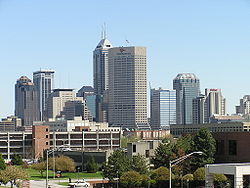
Indianapolis, also referred to as "Indy" or "Naptown," has an estimated population of just over 2 million people. Indy possesses what I refer to as an "urban-lite" vibe, meaning that we have a downtown and some cool urban areas, but we still maintain a small town sentimentality.

On occasion, I think Indianapolis gets a little too big for its britches. Sometimes as a city, we think we're a little more cosmopolitan than we are. Don't get me wrong - Indy's a great town. But we're only the 23rd biggest city in America and certainly don't have as much cultural diversity or depth as other cities might. At least, not yet.

Sports
Indianapolis has plenty of sports to keep visitors and residents busy. While we used to be referred to as the "Amateur Sports Capital of the World," I'm not sure that we're still plugging that as a plus. We have a pro football team (Colts), a pro basketball team (Pacers), and a pro women's basketball team (Fever), but baseball (Indians) and hockey (Ice) are more like farm teams in whatever the second level of those sports would be. We even have a roller derby team (Naptown Roller Girls), if you're into that.

Museums
Indianapolis is home to The Children's Museum, which I think is the largest in the world. It's an absolutely fantastic museum, if not a bit expensive to visit. We also have the Eiteljorg Museum, which houses Native American art collections, and The Indianapolis Museum of Art, which is absolutely wonderful. (BTW, you'll find links to just about everything I'm talking about in this post in the links on the right side of this web site, listed under "Cool Stuff To Do In Indy") There are other museums in Indy, as well, including the Indiana State Museum, plus we have a really awesome zoo that's totally fun to attend (even if zoos in general make me a little sad).

Music
Indianapolis has lots of great music. We have a symphony orchestra, loads of theaters, and great places for cool bands to play. We also have a nice local jazz scene and a thriving folk community, where you can watch and learn to play unique instruments like the hammered dulcimer and the autoharp, and can learn old sea shanties and folk tunes. While the pro circuit is lacking, amateur music in Indy abounds.

Events
There's no shortage of things to do in Indiana. We have tons of festivals and events year-round. In fact, I can't even keep up with all of them. There are cultural and ethnic festivals, art fairs, farmer's markets, music events...there's even a covered bridge festival. I honestly can't even come up with a reasonable list, because there are so many wonderful events. You could find some sort of festival or fair every single weekend to keep you occupied throughout the year, if you wanted to.


Food
Sometimes, as in the case of Barcelona Tapas, Indy-area restaurants get it so horribly wrong. But we have absolutely tons of excellent restaurants that get it right, and many are also super-affordable for families. If you check the Restaurant Reviews link in the category cloud on the left side of this web site, you'll find that I've already reviewed quite a few Indianapolis-area restaurants, and there are more to come. 

In Indianapolis, you'll find tasty restaurants of most cultures, plus restaurants devoted exclusively to breakfast, delicious dessert spots, and more. Within 5-10 minutes of my house, for example, we can choose from Mexican, Japanese, Italian, Indian, Chinese, Peruvian, Ethiopian, and an English or an Irish pub, not to mention all of the little American spots nearby.

Suffice to say, food in Indy is not lacking. I wouldn't say, however, that we're 5-star dining in Indianapolis. We do okay, but personally, I don't think we have any restaurants that really hit the highest Michelin rating. 

Finally, Farming
Yes, we do have farming, and plenty of it. We have all kinds of farms in Indiana, but our biggest crops are corn and soybeans (referred to simply as "beans" by most Hoosiers). We have a pretty active 4-H community in this state, and the Indiana State Fair is a great time to see all the stuff our farmers are up to, get a sense of what 4-H is all about and how it serves the kids who participate in it, and eat a bit of fried butter or fried Pepsi while you're at it (ewwww!)
But as you've seen, Indiana is far, far more than just farming and hicksville rednecks. Indianapolis provides a welcome oasis of cultural diversity that surprises most visitors. To be fair, I haven't even scratched the surface here. Part of the reason for that is that Leo and I haven't taken the time to explore our city quite as much as we might have. As we venture out to learn more about our local resources, you'll find more reviews and discussion on what Indianapolis (in particular) is all about and what's here. And who knows? You might find yourself wanting to visit soon. :)


Thursday, August 12, 2010

Restaurant Review: Sartori Robatai, Knightsbridge, London, England

Last week I talked about kaiten sushi, or "conveyor belt sushi." This week I'm sharing one of my favorite kaiten sushi restaurants, Sartori Robatai, in Knightsbridge in London. The food at Sartori Robatai is far superior to chain kaiten sushi joints like Yo! Sushi, and I think the pricing is similar. 

But what I love the most is the fun and the adventure of it. The best time to go is right when they open, so the food is freshest. The food comes around as they make it, and you have to decide right then and there if you want it. Take too long to decide, and you risk losing it before it has time to come back to you. Leo and I have had many giggle-filled moments trying to decide if we want something, and then leaping to catch it after it passes.

Another great thing about Sartori Robatai is the service. You might think that a kaiten sushi place wouldn't have great service, because the food is delivered via conveyor belt. But in fact, the service is fantastic. It's virtually impossible to be smothered, though, because the server really only comes when you need her. A little button is embedded in the bar where you eat, and if you need help, you simply press the button and she quickly appears.

The food at Sartori Robatai is absolutely delicious, but the star of the show for me was the plum wine, which is sweet and served over ice. All in all, Sartori Robatai is one of my favorite restaurants, and one of the few places I'll return to again and again.

Tuesday, August 10, 2010

Personal Injury Isn't Quite So Personal

Last week, Leo had a little fender-bender in the Blockbuster parking lot. The other driver apparently looked to the left and to the right, but never behind her, which is why she backed right into Leo. Even though it was a tiny accident, there was a bit of damage to our car and I knew I'd want to have it fixed, so the police were called. I know most people just exchange information, but the one thing my mom and dad always taught me was that if there's an accident, you always call the police, so that you can make sure that everything gets properly documented by a third party. That way no one can make outlandish complaints later, and everyone is clear on who was at fault.

A couple of days after the accident, when we looked through our mail, Leo had three letters from attorneys. At first I felt that small sense of alarm that one naturally experiences when one sees something legal in the mail. But then I noticed the small "Advertisement" and "Advertising Material" printed in the corner and when we opened the letters, they were all from personal injury attorneys advising Leo that he had rights! 

We've received more letters since then, and the question in my mind every time is, "How did they know?" It feels invasive and uncomfortable, a very similar sentiment to what I experienced when I got my first mortgage and mortgage companies were calling and sending me letters that included the exact amount of my mortgage, and when I last applied for health insurance and failed to mention a back injury from several years ago on the application. It had been so long and was so unimportant that I had completely forgotten about it. I received a phone call from the insurance company asking about it, and was surprised that they even knew about the injury at all, since I'd paid out of my own pocket for the treatments and never filed a claim with my insurance company.

We have so little privacy in our world today. Even as I write this, I'm thinking of the irony of writing about how little privacy we have, when I'm also writing about my personal life for all the world to see. Yet there are simple matters that I believe should be private - specifically, financial and health-related matters, but clearly, more than that. But I fear that we'll never be able to go back, so I'm left wondering...what's left in this world that is truly personal and private?

Saturday, July 31, 2010

About Uruguay: Cool Stuff to See

In my continuing series on Uruguay, I've talked about the Uruguayan cuisine, the culture, the people...today I'll share a couple of my favorite things to see in Uruguay.
Uruguay is a place that one could visit many times and still not see all the cool things there are to see there. In Montevideo, there are lots of gorgeous historical and architectural locations, but you'll do well to visit them with a Spanish-speaking guide, as the signs explaining each location's significance are all in Spanish. 

Two of my favorite things to see in Uruguay are found in Punta del Este, just up the coast from Montevideo. The first is the hand sculpture on the beach (photo, right, thanks to James in Manchester). I'd seen this sculpture in National Geographic and elsewhere since I was a child, but never remembered it was in Uruguay until Leo and I were vacationing on the coast and happened upon it. The sculpture is occasionally covered in graffiti; the government has it cleaned from time to time.

Another cool thing to see in Punta del Este is the sea lions who live in the harbor. If you're from the States, then when you think of "sea lion," you probably envision the sea lions at the zoo - sleek, frisky creatures with narrow heads that end in small sniffers. But the Uruguayan sea lions are much more lion than the ones we Americans know, and have large manes and broad, feline-like noses. They're surprisingly tame and this one (photo, left) was basking in the sunlight less than 8 feet from where I stood.

The story goes...we'd spent the afternoon in the harbor, having gone there specifically to see the famed sea lions, who live in the harbor and frolic on rocks and cement alike. We'd searched for the sea lions everywhere we could think of, and struck out at every turn, so we stopped for lunch at a harborside restaurant, where we enjoyed some stunning fish, fresh from the sea.

After lunch, I was snapping what I figured would be a fairly "artsy" photo of a snail crawling up a wall, when Leo walked over and said, "I want to show you something."

In full artistic photographer mode (let's be honest here - I'm no Ansel Adams, but I sort of know my way around an SLR), I said, "I'll be right there, just one second..." and then, in fairly dramatic fashion, Leo replied, "Sue, if you don't come right now, you'll regret it for the rest of your life."

Well, that got my attention, so I followed him around the corner, and there it was, mere steps away, in all its glory - a single, alpha male sea lion, with enough scars to make me believe he was not only big, but old, too. It was absolutely incredible - like nothing I'd ever seen.

He was massive, and as he sat there basking in the sun, he was so lazy and so totally relaxed, he made me a little sleepy. It was a brilliant, unparalleled moment in Uruguay, and if you ever have the chance to visit, I highly recommend that you seek out your own sea lion moment.

Stay tuned for more on Uruguay and other places around the world in the coming weeks!


Saturday, July 24, 2010

About Uruguay: What Are the Uruguayans Like?

Last week, in my continuing Saturday cultural series on Uruguay, I talked about what it's like in Uruguay, and ended with a note on the temperament of the Uruguayan people. Today I'll talk a bit more about what Uruguayans are like as a people.
The temperament of the Uruguayan people is much like their national anthem. I've never said that about any other country before, and I only heard the Uruguayan anthem for the first time during the World Cup. But as I listened to their song, it struck me as completely appropriate and musically descriptive of who the Uruguayans are - proud, fiercely independent, deeply and soulfully emotional, a little rebellious, and yet somehow, surprisingly light-hearted and humorous. 

Uruguayans are a lot like Argentinians, but a bit more humble, as their country is so small, with a population around 3 million in the entire country - there are more Uruguayans living outside Uruguay than in the country itself. Their Latin roots often make them seem a bit too emotional and dramatic, and while that can get in the way (something easily witnessed in their soccer game), it also serves them well (also, something easily witnessed in their soccer game). 

Family is vital to the Uruguayans, but rather than putting children first, they are, quite simply, a seamless part of everything. Children are to be seen and heard and they're involved, accepted, and enjoyed at virtually every social gathering. They matter - not more than everyone else, but as much as everyone else.

And if you want a simple etiquette tip...don't try to buy a drink for an Uruguayan's birthday - custom dictates that they'll be buying you a round of drinks or a meal on that day.

Next in this series, I'll cover a few cool things to see and do in Uruguay. Don't miss it!

Thursday, July 22, 2010

Restaurant Review: El Torero, Newcastle-Upon-Tyne, England

Lest you think I hate all restaurants, I decided to do a couple of reviews of restaurants I love. I'm starting overseas at what is currently my favorite restaurant in the world I've seen to date, El Torero (Milburn House,
Side City Centre).

El Torero is my favorite for a few reasons. First, the food is consistently, authentically, mouthwatering, something of a feat when you're in England. Second, the service is impeccable- not overbearing, but there when you need something. Third, when you walk through the doors, suddenly, you are in Spain. The servers usually speak Spanish, and everything has a pleasant, authentic feel. In El Torero, you sense that you really could while away an entire afternoon talking with friends over wine and tapas. And the most important reason that El Torero is my favorite restaurant? Leo and I dined there many times during our courtship and he even colluded with the staff there to surprise me on my birthday (see the photo of us with the most amazing birthday cake ever- a rich chocolate torte from Thornton's, which was covered in chocolate with chocolate truffles embedded in the top- ridiculous), so this restaurant holds a very special, dear place in my heart. Leo and I love El Torero so much that we had our wedding caterer copy some of our favorite dishes from their menu.

So let's start with the food. You can easily see from the photo (theirs) that the food looks good. But more importantly, it's authentically Spanish. Everything on the menu is exactly as they promise. 

The pan y alioli is exactly what you want it to be - a baguette-style bread that's light and crunchy on the outside and just the right amount of airy and chewy inside, accompanied by an alioli that's the perfect blend of garlic and mayonnaise. The aceitunas are straight from Spain, gorgeous, plump, fat green olives that disappear far too quickly. The paella de pescado y mariscos, cooked to order for two, is a perfect representation of everything paella should be - the rice is a gentle yellow color from the saffron, the seafood left in shells to keep the flavor and moisture in, and every flavor working in brilliant, beautiful harmony. The cigalitas plancha are large prawns, cooked to perfection, absent of that springy, rubbery texture one finds all too often in shrimp dishes. The gambas al ajillo (king prawns) have a hint of spiciness from the chili peppers that's easily relieved with sangria. And the patatas payesa, oh, the patatas payesa...potatoes lightly fried with onions and red peppers. The peppers and onion caramelize and subtly flavor the potatoes so that as soon as they hit your mouth, you think you've died and gone to heaven. To finish the meal, sometimes they'll bring you an elegant shot glass filled with Tilford, a Spanish hazelnut liqueur that blows Frangelico out of the water.

Chef Almirón, originally from Andalucia, is a genius at translating native Spanish tapas cuisine. His recipes are authentic, flavorful, and beautifully-presented. "El Torero" translates to "bullfighter," and if Almirón is the fighter here, then one almost feels sorry for the bull...but looks forward to seeing the brilliant way Almirón will serve it.


Saturday, July 17, 2010

About Uruguay: What's It Like There?

In our continuing Saturday series on Uruguay, today I'll cover what it's like in Uruguay, focusing mostly on the capital city of Montevideo.

Despite that many people think Uruguay is "a small, obscure country in South America" (actually, that's me - I'm always teasing Leo that he comes from a "small, obscure country in South America"; it's a running joke at our house), Uruguay is much like a European country.

In the interior of the country, I'm told there are some forests, where one can find tarantulas, which should explain quite clearly why I've never ventured inland. ;) In the developed areas, however, Uruguay is a lot like any other city with a long and rich history.

In particular, Montevideo, with its multi-cultural architecture, intriguing sculpture, and monuments (several of them dedicated to important figures in education), multitude of restaurants, and copious boutiques and shopping malls, seems, in most ways, like any city you'd find in Europe. There's an older part of the city, where one can find a street market where artisans sell jewelry and handmade goods, and a newer part of the city, where one can buy the same electronics and name-brand merchandise you'd find anywhere in the States (albeit at a premium, due to import taxes).
But look a bit more closely and you'll see evidence of the country's not-too-distant dictatorial history; the Uruguayans suffered through military leadership from the early 1970s until it was overthrown in the mid-to-late 1980s. And if you look a bit beyond the mouthwatering cuisine and the stunning seaside views, even beyond the bit of political protest graffiti that remains here and there, you'll discover that the toll of the dictatorship on the Uruguayan people themselves still lingers just beneath the surface, making them fiercely independent, proud, and maybe even a little rebellious.

Which of course brings me to the next topic in this series: the beautiful temperament of the Uruguayan people. Tune in next Saturday!


Sunday, July 11, 2010

Learning Foreign Languages

People in foreign lands appreciate it if you learn a little of their language. Even if they speak English, even if you muck it up, they like that you respected their culture enough to try.

I took French in grade school, high school, and college, yet when I traveled to Paris, I realized how much I had forgotten. Still, I knew enough to try and the French seemed to really appreciate how much effort I made. Our concierge gave me a mini language lesson every morning, and I have many treasured memories of trying to make myself understood. In particular, I remember a clerk trying to help me purchase a wine tasting kit. He didn't know enough English to really help me, and I didn't know enough French to ask the questions I wanted to ask. Through a hilarious combination of broken French, broken English, and terrible mime, we muddled through.

In a similar circumstance in a Montevideo restaurant, I asked Leo to allow me to try out my Spanish. Once I successfully asked where the restroom was, I realized I didn't know enough Spanish to understand the waiter's response. Luckily, Leo came to my rescue and pointed me in the right direction. These days, I know a lot more of those key words like "right" and "left."

Those are exactly the kind of travel experiences I want to have, and they're the kind  of moments that show you a ton about other people and cultures and make for interesting dinner conversation later.

Best way to learn a foreign language? Start with the basics - get a CD like Pimsleur (the library will have the more complete, expensive version) or Rosetta Stone, and start learning.

You can also check your local library. Ours has a Language Lab where you can learn all kinds of languages using their software and headsets, and you can even access the software from home. It's really cool!

The BBC has online language courses, too. You can learn French, Spanish, German, Greek, Chinese, Italian, Portuguese, and more.

There's also The Language Learning Library, where you can learn French, Spanish, German, Italian, Portuguese, Japanese, Chinese, and Russian.

And it's always nice to have a friend who speaks the language to help you improve your skills. There are lots of subtleties, jokes, and phrases I would never know about if Leo didn't help me from time to time.

You don't have to learn the entire language. But knowing a few key phrases can be really nice. I know passable French, some Spanish, and a tiny bit of several other languages. My husband is a native Spanish speaker, and also speaks Italian and English. It's really helpful to know other languages when you're traveling, but it's also just...nice.

Saturday, July 10, 2010

About Uruguay: The Food, Oh, The Food!

This post is a part of a series on Uruguay, and today I'll be talking about the cuisine of Uruguay, a delightful and surprising multicultural mix of Spanish and Italian flavors, French baking, and general European tastiness.

The Cuisine of Uruguay
In Montevideo, you'll find a wide assortment of foods. You'll find Spanish flavors, including tapas, Italian pasta, lots of fish (Montevideo is a harbor town), Italian gelato, French pastries, and pizza by the meter. (you don't ask for a slice, you ask for a measurement!) 

One dish figures prominently on virtually every dessert menu- flan con dulce de leche ("flahn con DOOL-say de LECH-eh," an egg custard with a thick goo that's like caramel, but so, so much better; pictured at right)- and it's almost always prepared entirely from scratch.  

And there's a lot of meat in Uruguay. It's their chief export and they take it very seriously, with copious barbecues where meat figures prominently. An Uruguayan barbecue is usually made of brick, and has a square opening where you build the fire, with a grated shelf over that, and a square opening at the bottom for storing wood.

Generally, the food is in Uruguay is the thoughtful food of a people who love nothing more than whiling away the afternoon in a bar laughing with friends and talking about everything from football (soccer) to politics. In America, as soon as you're done eating in a restaurant, you pay and leave; this seems entirely foreign and abrupt to an Uruguayan (or for that matter, a Spaniard).

In every household and on the streets, you'll find yerba mate. Mate is absolutely everywhere, and it's not uncommon to see people in stores, holding a leather-wrapped thermos under their arm and carrying a mate (a hollowed-out, wrapped-in-leather gourd filled with yerba mate, seen in the photo at left). The gourd is filled with yerba mate leaves, then hot water is added and the tea is drunk with a bombilla (a metal straw with a wide base that has holes in it). As the tea is consumed, more hot water is added, making the bitter drink decidedly more palatable. You can see the typical mate stance modeled by my brother-in-law in the photo to the left. In the photo, he's also sporting a common Uruguayan injury: a burn to the hand sustained while pouring hot water into the mate. :D

In the next post in this series on Uruguay (next Saturday), I'll talk about what Uruguay itself is like - the city of Montevideo, Punta del Este, and more.


Thursday, July 8, 2010

Let Me Tell You Something About Uruguay

As many of you know, my husband, Leo (in the photo, left), is originally from Uruguay. One thing we've discovered after Leo living in America for a year and a half is that most people don't know anything about Uruguay, and most people don't know how to even say "Uruguay." So today, in honor of Leo and to celebrate Uruguay's brilliant showing at the World Cup, I'm starting a series in my blog, called About Uruguay, that will appear regularly on Saturdays (starting this coming Saturday). In this series, I'll teach you how to properly say the name of my hubby's homeland and, tell you a little more about the Uruguayan people, their cuisine, customs, and culture.

First, what's the proper way to say "Uruguay?"
Most Americans say "ER-oo-gway" or "YER-uh-gway." The proper pronunciation is "OO-roo-gwhy" so that the last syllable rhymes with "pie." And if you happen to be able to roll your R's, you'll sound even more authentic. 

Okay, now that I can say it right, where the heck is Uruguay?  
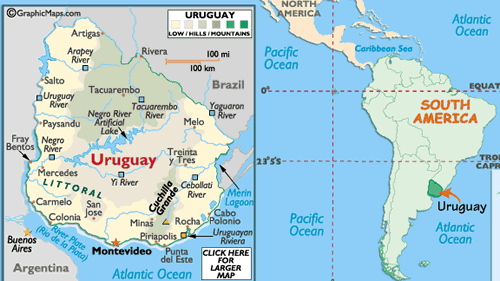
As you can see from the map below (again, special thanks to WorldAtlas.com always having the most rockin' maps), Uruguay is in South America, on the southeast side of the continent. It shares borders with Brazil and Argentina. Being on the other side of the Equator, their seasons are opposite those in the States and Europe, so when it's summer here, it's winter there, and vice versa, which means that Christmas is a very different kind of celebration - no snow and lots of fireworks.


 Who lives in Uruguay?
The people of Uruguay are descendants from many different (mostly European) nations. The dominant cultures are Spanish and Italian (Spanish is the dominant language), but you'll also find French, Dutch, German, Portuguese, and others. What you won't find, though, are native people. It turns out that Spanish conquerors wiped out all the natives, which is why Uruguay, and in particular, its capital city, Montevideo, has such a European feel to it. Like Argentina, almost 88% of the population is descended from European settlers. That "melting pot" vibe also means the food in Uruguay rocks.

And that's what I'll be talking about next time: the Uruguayan food. And let me tell you, it's delicious. :) Stay tuned!